
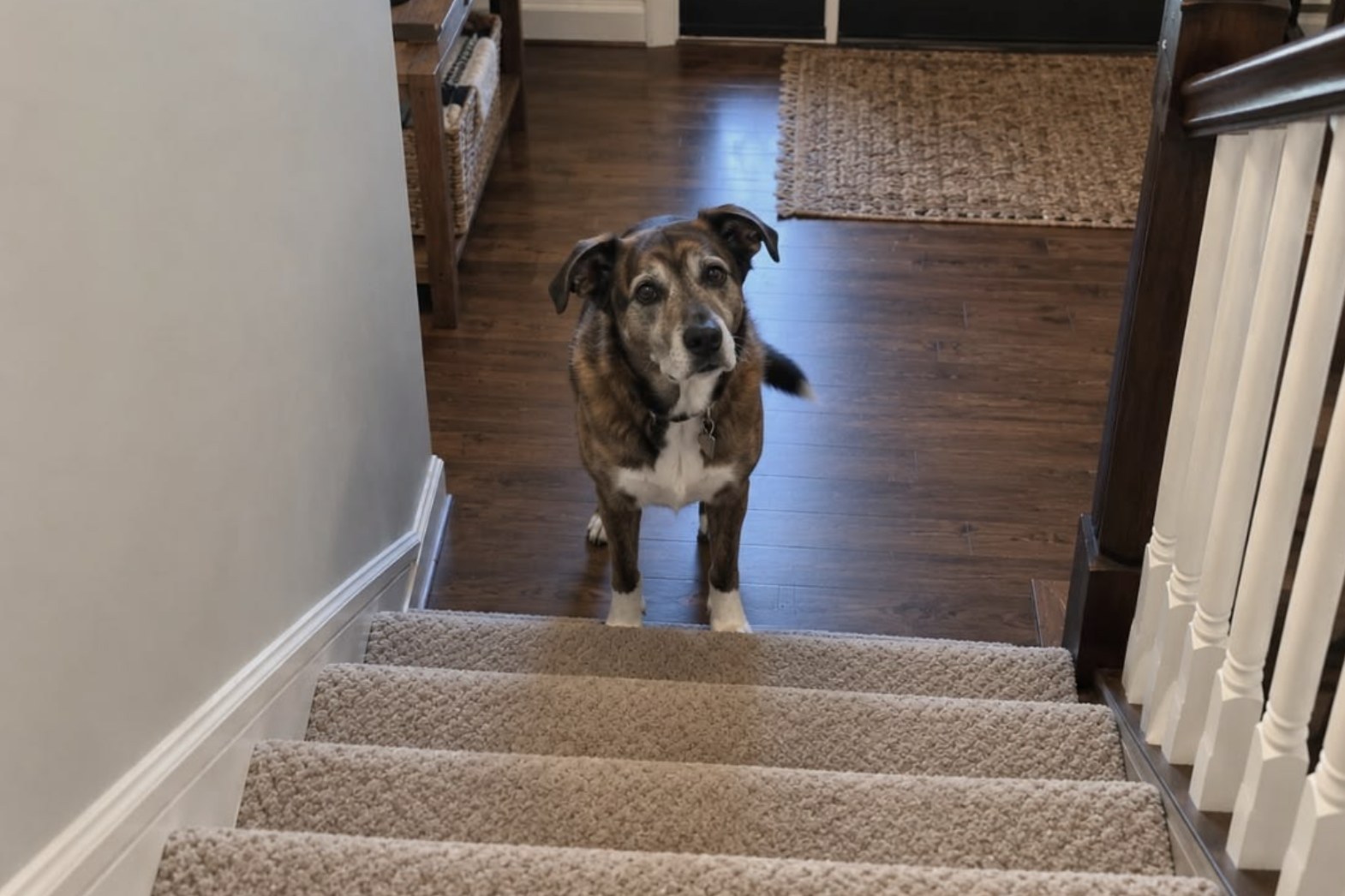
He Gets Up In One Try Again, Starting With The Mornings
Watch an arthritic dog after a long nap. He rocks forward, pauses, then pushes up in stages. Joints with arthritis stiffen while they rest, so mornings and post-nap get-ups are the hardest part of his day.
That's exactly where owners notice red light therapy first. The usual pattern: a quiet first week, then a dog who stands up off the floor in one motion. Stairs and the couch tend to follow over the next few weeks as the stiffness keeps easing.
Research in dogs lines up with that timeline. In a 2022 double-blind trial on dogs with hip arthritis, the light therapy group scored better on pain and function than dogs on a prescription anti-inflammatory at day 8, 15 and 30, and their range of motion kept improving through day 90.1
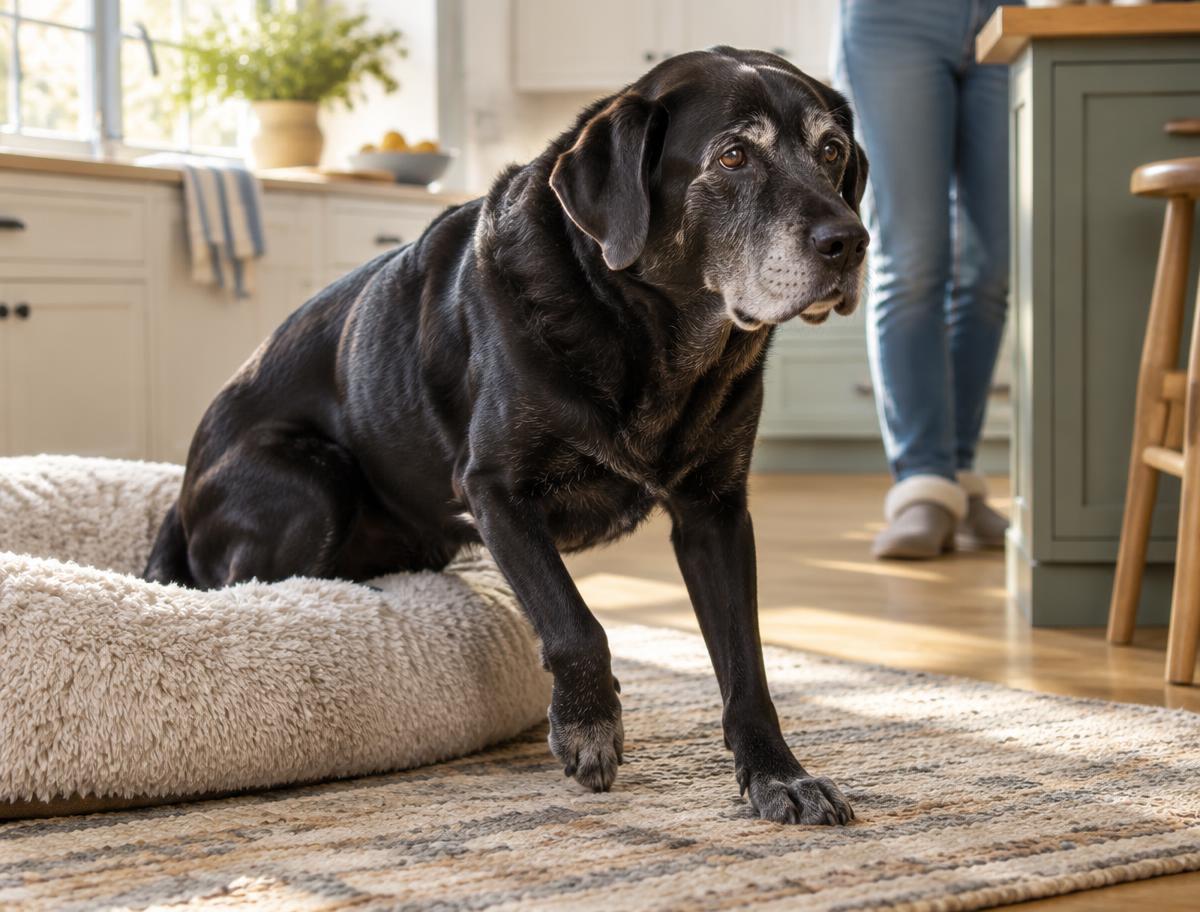
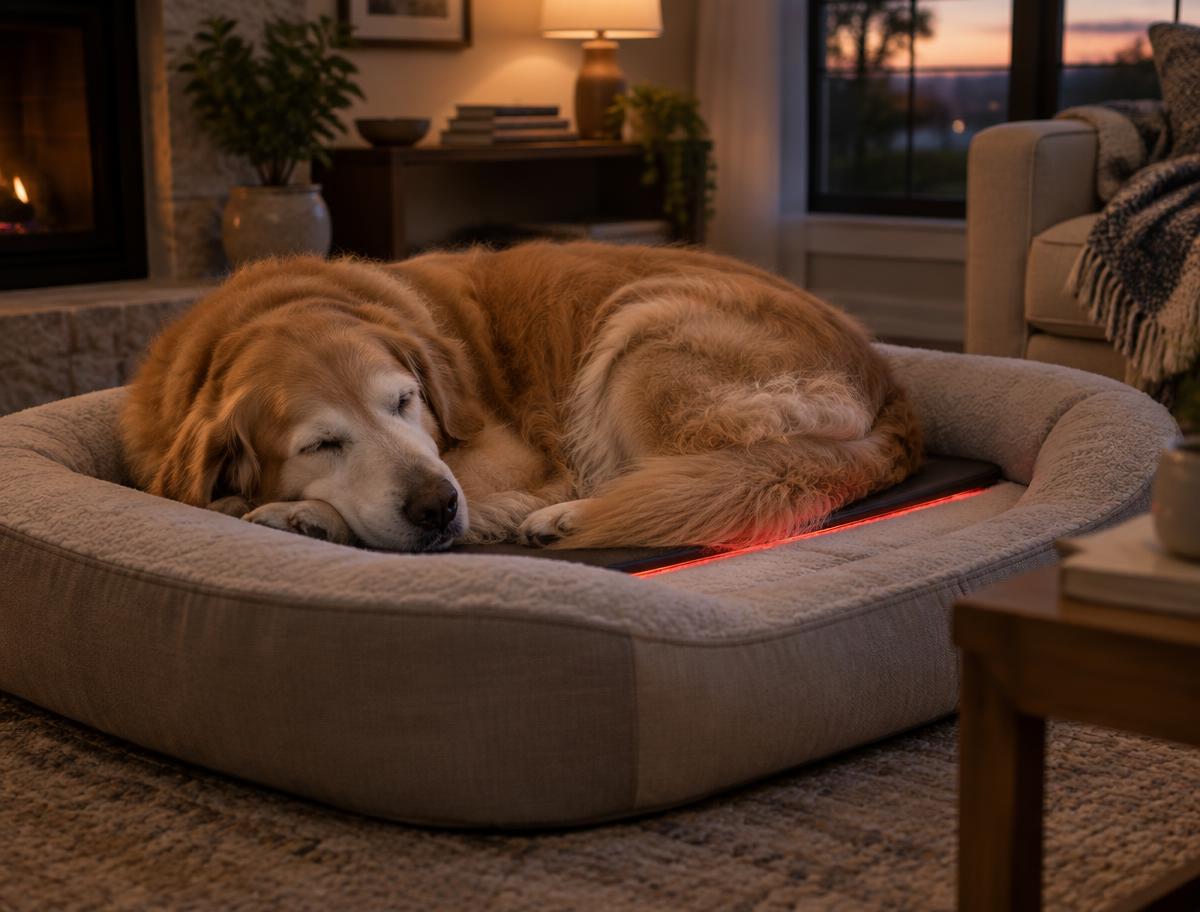
It Works While He Sleeps, On The Bed He Already Uses
Red light works through steady, repeated sessions. Clinics schedule it several times a week for that reason, and at $40–100 a visit3 plus the car rides, most owners can't keep it up for long.
Home devices hit a different wall. A handheld wand needs your dog to hold still for ten minutes. Wraps and vests need him to put up with straps. Most dogs stand up and walk to the other side of the room.
TheraPaws is a thin, cordless mat that lays on top of your dog's existing bed. You keep the bed he loves and you strap nothing to him. Most adult dogs sleep 12 to 14 hours a day, and seniors often more, so you switch it on when he settles and the session runs itself.
Fifteen minutes, then it shuts off. Light therapy becomes a daily habit that takes you about five seconds.
Fits on a dog or cat bed · 30 Day Guarantee
The Science: What Red Light Actually Does Inside A Stiff Joint
The simple version
Plants turn sunlight into energy. The cells in your dog's joints do something similar with specific shades of red and near-infrared light. That extra energy helps them do their repair work and turn down inflammation. Scientists call it photobiomodulation. Vets call it laser or light therapy.
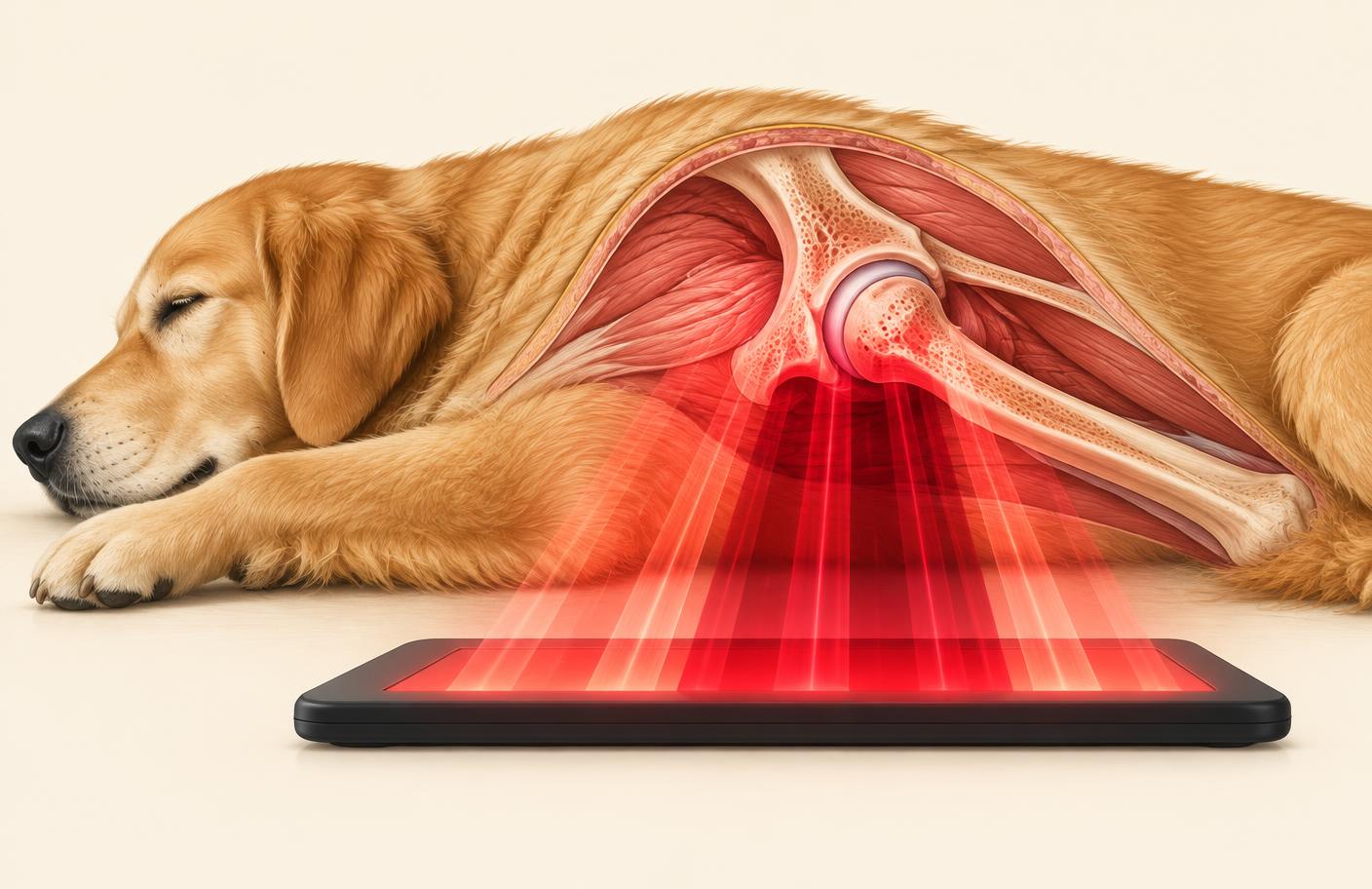
What's happening in an arthritic joint
Cartilage, the smooth cushion on the ends of the bones, wears thin. The joint lining gets inflamed and releases chemical alarm signals (IL-1β, IL-6 and TNF-α) along with enzymes called MMPs that break down even more cartilage. More damage brings more inflammation, which brings more pain.
That loop is why arthritis keeps getting worse when nothing interrupts it.
The light gets in
Most colors of light bounce off the skin or get soaked up at the surface. Red and near-infrared sit in what researchers call the “optical window,” the range body tissue lets through best. TheraPaws uses two: 660 nm red, absorbed closer to the surface, and 850 nm near-infrared, which travels deeper toward the muscle and joint.
The cells absorb it
Inside every cell are mitochondria, the parts that make energy. One enzyme in them, cytochrome c oxidase, absorbs red and near-infrared light. In stressed, inflamed cells, this enzyme gets slowed down by nitric oxide. The light knocks that nitric oxide loose, and the cell's energy production (ATP) picks back up. The released nitric oxide also helps relax nearby blood vessels.4
The joint responds
With more energy and better signaling, studies of light therapy in arthritis show lower inflammatory signals, less cartilage breakdown, support for cartilage-building cells, and higher pain thresholds.5
In real dogs
Why the fur matters, and why a mat solves it
A 2020 study measured how much therapy light makes it through a dog's coat. Shaved skin let through significantly more light, and darker coats blocked more.7
That's why clinic protocols put the device right against the body. On TheraPaws, his own body weight does the job: he lies directly on the panel with his coat pressed flat and the light right up against him.
Clinic lasers deliver a big dose in a few minutes. A mat delivers a gentler dose that builds up with daily use, which is why TheraPaws is designed to run every day while he naps.
One Mat For Every Pet In The House, Cats Included
You size TheraPaws to the bed, so it works for dog and cat beds. Older cats get stiff joints too, and the light works on the same cell machinery in every mammal.
It also works for younger dogs. Researchers at NC State found arthritis on the X-rays of 4 in 10 dogs between 8 months and 4 years old.8
Big breeds, very active dogs and dogs with hip or elbow dysplasia often start stiffening years before anyone calls them senior. Starting early keeps the inflammation turned down for more of his life.
30 Nights To See If He'll Use It, Or Your Money Back
The one real question owners have is whether their dog will lie on it. Most do on the first night, because it's on the bed they already sleep in. If yours won't, send it back within 30 nights for a full refund.